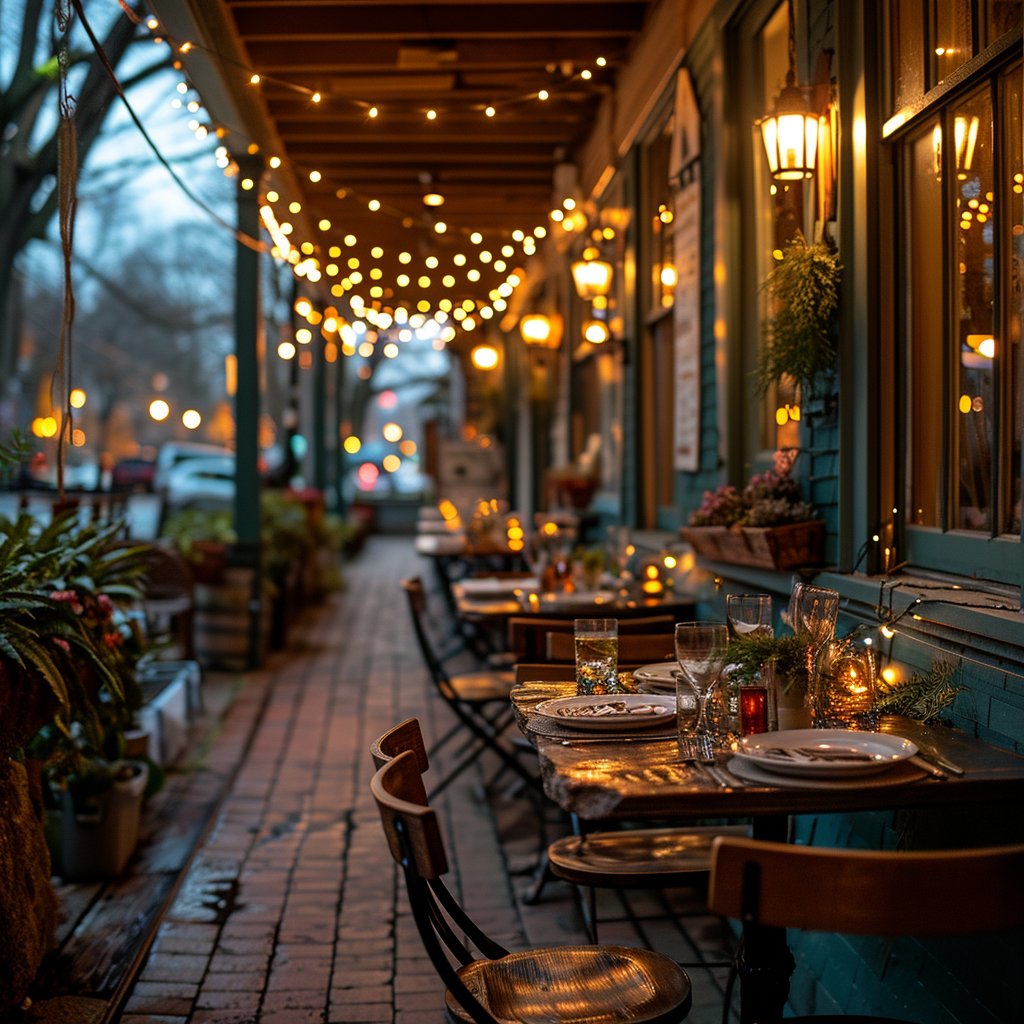
Walk past 5164 N. College Ave. today and you will find a Neapolitan pizza counter, gas ovens fired hot, a first-time operator named Tony Ricci running the show after training at Kesté in New York. Six months ago, that same storefront was Oca Sushi, a five-year fixture that owner Kenji Watanabe closed this February. The closure had nothing to do with slow nights. It came down to the lease. By May, Piccolo Forno had moved in.
If you have lived in Broad Ripple for more than a year, you have probably watched some version of this happen more than once. A storefront empties, sits dark for a few weeks, then reopens as something else entirely. It is easy to read that as instability, as if the Village cannot hold onto a business long enough to let it settle. The more accurate read is almost the opposite. The turnover on Broad Ripple Avenue right now is happening because landlords believe the neighborhood can support higher rents, not because it can't support the businesses inside it.
A Reset, Not a Retreat
The Oca Sushi story is instructive because it is not really a restaurant story. It is a commercial real estate story wearing a restaurant's name. CityDesk Indianapolis, which tracks the city's openings and closures with permit-level detail, described the closure as part of a broader pattern across Broad Ripple: commercial landlords resetting their expectations after years of pandemic-era leniency. Watanabe was not failing. He was priced out.
That distinction matters if you live here, because it changes what the empty storefront on your block actually signals. A dark window on Broad Ripple Avenue in 2026 is more often a landlord waiting for a tenant who can pay the new number than a sign the block is struggling.
The Avenue Is Resetting All at Once
Oca Sushi is not an isolated case. It is one data point in a wave that is reshaping several blocks of the Village at the same time this year.
Kenji Tanaka, who owns Koyo, confirmed in April that he is negotiating a lease for a second Koyo location somewhere in Broad Ripple, betting the neighborhood can support two locations of the same restaurant within walking distance of each other. Meanwhile, at 812 Broad Ripple Ave., a Bedford native and country music artist named Clayton Anderson is bringing a concept called Clayton's Ripple Rodeo to the Village, one of two country-themed bar-and-grill projects he is opening in Indianapolis after more than a decade living in Nashville, where he watched Lower Broadway's bar scene become an economic engine for that city's entertainment district.
Two different concepts, two different bets, both landing on the same handful of blocks in the same year. That is not a neighborhood in decline. It is a neighborhood where enough operators believe foot traffic justifies the risk of a build-out that they are doing it at the same time.
Why This Is Happening Now
The mechanism is straightforward even if it does not feel that way when your favorite lunch spot vanishes. Commercial landlords along Broad Ripple Avenue held rents steady for years to keep long-tenured tenants in place. That patience has an expiration date. As those leases have come up for renewal, landlords have started asking for market rate, sometimes well above what a tenant signed for five or ten years ago.
Some tenants can absorb the increase. Others cannot, and the space turns over to whoever can. That is what happened at 5164 N. College Ave. It is likely what will happen again somewhere else on the Avenue before the year is out.
For a resident, the practical takeaway is simple: if you have a favorite spot that has been there a while, that longevity is not a guarantee. Enjoy it while it is here. And if you see a new concept open in a space that recently changed hands, do not assume it is a fluke. It is more likely evidence that someone ran the numbers and decided Broad Ripple is worth the higher rent.
What Doesn't Move: Saturday Mornings at the Market
Set against all that churn is the Broad Ripple Farmers Market, which has been running since 1994 and is now the largest farmers market in Indiana. It does not experience the same turnover, because it was never built around a single storefront lease. It runs outdoors from May through October with more than 80 vendors, then moves indoors from November through April with 60 or more. Every Saturday morning, 8 a.m. to noon through September, the same rhythm repeats no matter what has changed a few blocks away on the Avenue.
This summer's vendor lineup is a good illustration of how stable the market's core actually is. Lettuce is coming in from Freedom Valley Farm, Full Hand Farm, Weathered Plow Farmstand, Christopher Farm, and Norman Mullet Farm. Jason Michael Thomas is selling organic non-GMO sweet corn alongside organic rye sourdough. Gladiolus have started their annual run at a few of the flower vendors. None of that depends on which restaurant is occupying a storefront on College Avenue this month. If you want the version of Broad Ripple that does not reinvent itself every quarter, the market on Saturday morning is it. Mark September 20 on your calendar too, when the market hosts its annual Dinner in the Garden fundraiser.
The Park Found a New Use Without Losing the Old One
Broad Ripple Park is doing something a little different from either the restaurant row or the farmers market. It is not turning over and it is not standing still. It is adding a new layer on top of what has been there for two centuries.
The park itself dates back to 1822 and spent the early 1900s as White City Amusement Park, Indianapolis's answer to Coney Island, before later hosting Olympic swimming trials in 1924 and 1952. Today it draws roughly 275,000 visitors a year across its 62 acres. What changed is that Forty5, the promoter behind the Rock the Ruins series at Holliday Park, launched a pilot concert series there in August 2025, kicking off with Drive-By Truckers and Deer Tick. That pilot has since become a recurring part of the summer calendar, with Indy Parks running its own free concert series at the park this season alongside the ticketed shows.
The difference between this and the restaurant turnover matters. The park did not lose its identity to gain a concert series. It kept being a park and picked up a new reason to visit on a Friday night.
Even the Association Running the Village Changed Hands
One more data point worth knowing if you follow neighborhood organizing at all: the Broad Ripple Village Association, which puts on the farmers market and coordinates much of the Village's programming, has a new Executive Director this year. Jordan Dillon stepped down from the role last fall, and Mary Dicken took over in January. The organization did not pause. The market still opened on schedule in May. That is the same lesson as the park and the market, just applied to who is running things instead of what is on the corner.
The Thesis, Stated Plainly
If you take one thing from all of this, take this: the businesses on Broad Ripple Avenue are more replaceable than the Village itself. A restaurant lease can end. A landlord can reset a rent and force a tenant out. But the Saturday market, the trail along the canal, and now the park's summer concerts do not depend on any single business surviving. They are the load-bearing structure. The storefronts are the part that gets remodeled.
That is worth knowing whether you are deciding where to eat this weekend or just trying to make sense of why your block looks a little different than it did last year. The turnover is not a symptom of a neighborhood in trouble. It is what a neighborhood in demand looks like from the inside.
If you are a longtime Broad Ripple resident with questions about the neighborhood, or you are simply curious what a property here is actually worth in a market that keeps resetting its expectations, Emily Dyer Humphrey works and lives in this area and is always glad to talk it through. Reach out anytime to schedule a consultation.