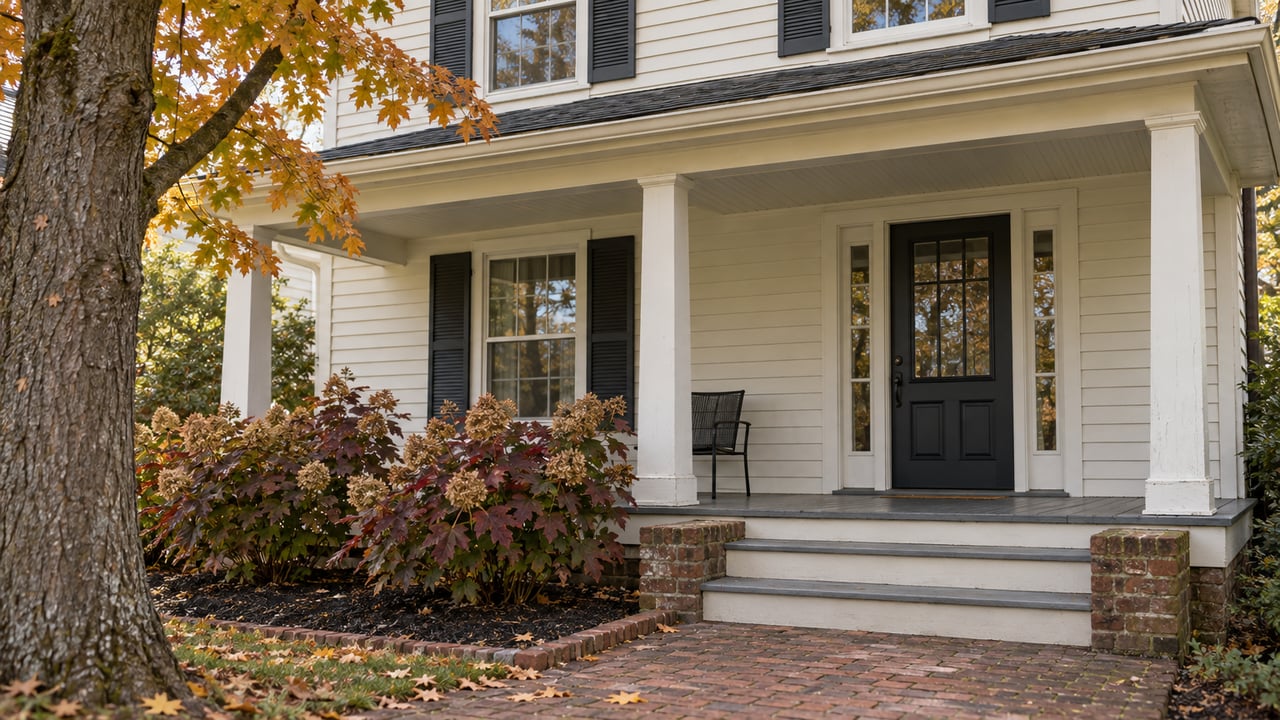
"The state legislature has increased the homestead deduction, so what used to be 35 percent is steadily going up," Fishers Mayor Scott Fadness told the City Council in September, as Current in Fishers reported. "So, if you own a $500,000 home, by the time 2030 comes around, you will see a marked reduction in your net assessed value."
He said this while asking for a 6.7-cent increase in the city's property tax rate, and he also said that increase won't necessarily raise any individual homeowner's bill. Both statements hold because the tax rate is no longer the number that best predicts what a Fishers homeowner pays. The better predictor is whether the property is filed as the owner's homestead. For a buyer, that depends on a form they have to file themselves.
The tax line on a listing reflects the seller's status
The "annual taxes" figure on a Fishers listing comes from the current owner's bill. If that owner lives in the home and has claimed the homestead deduction, the figure includes deductions the buyer doesn't get automatically.
Hamilton County's instructions for the homestead deduction application, Form HC-10, describe how a move works. A person who leaves their Indiana principal residence after the assessment date and moves to a new one later that year keeps the deduction on the first property for that tax cycle. They can apply for a deduction on the new property for the same cycle. On the next assessment date, the deduction comes off the first property. The deduction follows a filed application, not the deed.
Several details on the Hamilton County HC-10 page matter to a buyer:
- The application has to be completed and dated in the calendar year you want the deduction for. The county's instructions say to file or postmark it with the county auditor by January 5 of the following year.
- You must already be using the property as your principal residence when you sign the application.
- Only one individual or married couple can receive a homestead deduction on a given property in a given year.
The Indiana Department of Local Government Finance says deductions generally don't need to be refiled every year, but owners should reapply when a property is sold or the title changes. Its example deadline is January 15, 2026 for a deduction to show on the 2025 Pay 2026 bill, which is ten days later than the county's printed January 5. If you close on a Fishers home this fall, confirm the current deadline with the Hamilton County Auditor's office rather than relying on either date. This post is general information, not legal or tax advice, so check the specifics of your own purchase with the county or a tax professional.
Filing the form is now worth more than it used to be, and that same change is why the city's rate is going up.
The rate went up because the taxable base is shrinking
Under Senate Enrolled Act 1, Indiana's 2025 property tax law, a homestead's taxable value is reduced in two steps. First comes a flat standard deduction. Then a supplemental deduction takes a percentage of whatever value is left. The schedule in a DLGF deductions and credits presentation from October 2025 moves these two in opposite directions:
| Tax bill year | Standard homestead deduction | Supplemental deduction on remaining value |
|---|---|---|
| Pay 2026 | $48,000 | 40% |
| Pay 2027 | $40,000 | 46% |
| Pay 2031 and later | $0 | 66.7% |
In between, the standard deduction drops $10,000 each year, to $30,000 for the 2027 assessment date and $10,000 for 2029. The supplemental deduction is capped at 75% of gross assessed value. Starting with 2026 bills, the law also added a supplemental homestead credit worth the lesser of $300 or 10% of the year's tax liability. The county auditor applies it to eligible homesteads without a separate application.
Since every homestead in Fishers is taxed on a smaller net value, the city needs a higher rate to raise roughly the same revenue. Fadness put it that way: as assessed values go down, the city has to increase the rate to keep its budget and services. He added that, even with the increase, Fishers' proposed rate would still be the lowest among Indiana's 10 largest cities. The draft 2027 budget totals about $224 million, roughly $20 million more than this year, and includes 3% raises for all city employees.
On October 12, 2026, the Fishers City Council approved the 2027 budget ordinance on a roll-call vote, with every member voting yes, according to the meeting minutes.
The city has been through this once already. A year earlier, Fadness said the state law had cut the city's projected property tax revenue by about $3 million. He said a separate change to local income tax distributions was expected to return about $8 million, according to Current in Fishers. He also called property tax rules "shifting sands" and said more changes will probably come in the next legislative session.
The tax burden is shifting to property that isn't anyone's homestead
When homestead values shrink and rates rise, the higher rate lands at full weight on property that doesn't get the new homestead relief. Indiana's circuit breaker caps limit how far that can go. The DLGF's circuit breaker fact sheet sets three caps:
- 1% of gross assessed value for homesteads
- 2% for other residential property, which includes buildings with two or more units, such as apartments, along with long-term care and agricultural property
- 3% for nonresidential and personal property
A November 2025 analysis from the Indiana Fiscal Policy Institute, published by the Indiana Capital Chronicle, summarizes the Legislative Services Agency's statewide estimates for 2028 compared with prior policy:
- Homesteads pay about $391 million less.
- Other residential property pays about $46 million less.
- Apartments pay about $23 million less.
- Business land and buildings pay about $408 million more.
Non-homestead residential property and farmland get their own deduction, which phases in to 33.4% by pay-2031. Business land and buildings get no new deduction. The same report says much rental housing is already at its 2% cap. If local rates rise above $3 per $100 of assessed value and a rental stays at that cap, SEA 1 doesn't change its bill. It also places Hamilton County among five Indianapolis-area counties projected to lose more than 26% of net assessed value once the law is fully phased in. That figure is a modeled scenario based on 2025 values, not a measured result.
For a buyer comparing homes, this points to a practical gap. A Fishers house that has been a rental, or a newly built home that has never had an owner-occupant, is taxed under different deductions and a different cap than the same house filed as someone's homestead. Its tax history may say little about what an owner-occupant will pay once a homestead filing is on record.
A second tax decision is on the November 3 ballot
Hamilton Southeastern Schools is the other major taxing unit on most Fishers bills, and it faces the same shrinking base. In June, the HSE Board of Trustees voted 6–0 with one abstention to put a replacement operating referendum on the November 3 ballot, Current in Fishers reported. The current referendum, approved by voters in 2023, allows a rate of up to 19.95 cents per $100 of assessed value.
The district's August 12 announcement gives these terms:
- The ballot will list a maximum rate of $0.36 per $100 of assessed value for eight years.
- After the 2027 certified net assessed values were released, the district lowered its expected first-year rate from $0.2275 to $0.2200.
- At the revised rate, the district estimates that a homeowner with a 2026 gross assessed value of $400,000 would pay about $26 more in 2027 than under the current referendum. Its earlier estimate was $37.
- If voters approve, the board would set the actual rate each year through the public budget process.
HSE says it has made more than $7 million in ongoing cost reductions. It also expects about $45 million less in projected referendum revenue over the last six years of the current referendum because of the change in state law. Full terms and the district's own figures are on HSE's referendum page.
Quick answers
Does the city's 6.7-cent increase mean my Fishers tax bill goes up in 2027? Not necessarily, according to Fadness. The supplemental homestead deduction rises from 40% to 46% for pay-2027 bills, which lowers the net value the rate applies to. Each bill also depends on your own assessment and on the other taxing units where you live.
Do I have to apply for the $300 credit? No. The DLGF says the county auditor applies the supplemental homestead credit to eligible homesteads without a separate application. Eligibility starts with having the homestead deduction, which does require an application.
What caps a homestead bill? The circuit breaker limits a homestead's bill to 1% of its gross assessed value, according to the DLGF's Citizen's Guide to Property Tax.
When we look at a Fishers home together, I'll help you read the tax line on the listing in light of the seller's homestead status, so the monthly payment you plan around matches the bill you're likely to get. To go over the numbers on a home you're considering, Emily Dyer Humphrey is here when you're ready. Schedule A Consultation.